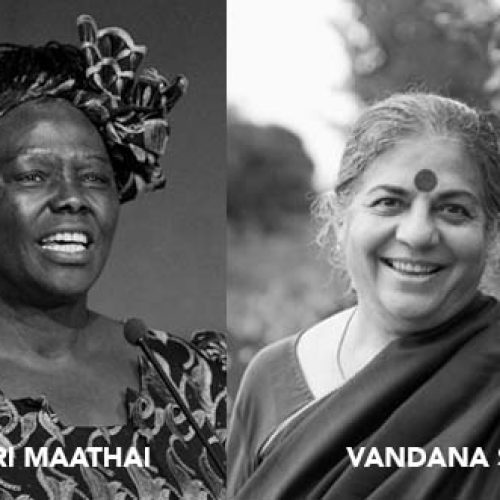
International Women’s Day is the day to celebrate the many achievements made by women and fighting against inequality. It is a day to raise awareness and take action. The basic rights women enjoy today is only possible because women in the past stood their ground and fought for us. Let us celebrate them by learning about two female environmental activists who have fought and are still fighting today to make our society better.
Wangari Maathai
Wangari Maathai was known for her activism to improve the environment and empower women. She not only broke gender barriers in education and employment, but also overcame seemingly insurmountable political oppression in her home country, Kenya. There was a lot of violence in the country due to its lack of resources and corrupt governing officials. This ongoing cycle of poverty compelled Maathai to take action. She proposed the idea of planting trees to bind the soil, store rainwater, provide food and firewood, and provide a small monetary token to people for their work.
The Green Belt Movement
In 1977 she founded the Green Belt Movement. The movement focused on marginalized groups such as women, the disabled, and the elderly, as they faced the greatest obstacles in their society.
In 1989, Maathai and her supporters staged demonstrations to oppose the destruction of Uhuru Park, one of the biggest public recreational spots in Nairobi, the country’s capital. Maathai was also responsible for changing the face of Kenyan politics. She and the Green Belt Movement at large soon became a symbol of freedom and peace as it challenged the oppressive Kenyan regime, unyielding amidst all the blood and violence. She protested against unjust government projects and demanded the release of political prisoners. Throughout her journey as an activist, she was insulted and even received death threats, but she did not back down. Maathai’s advocacy for the environment, women’s rights, democracy, and civil liberties is inspiring for everyone. Let’s continue her fight.
Vandana Shiva
Vandana Shiva is a physicist, ecologist, and a trailblazing food rights activist. She believes food sovereignty is sovereignty over our lives and health. She was an active volunteer in the Chipko Movement in India. This movement was a non-violent initiative conceived in 1973 for tree protection and conservation. In collective memory, it is best known for mobilizing women and bringing about a change in how they viewed themselves in society.
Shiva also founded the Research Foundation for Science, Technology, and Natural Resource Policy (RFSTN) in 1982. This is an organization dedicated to developing sustainable methods of agriculture. By championing food sovereignty, sustainability and seed rights for local farmers around the world, Shiva reminds us that “food and culture are the currency of life” and that you can’t have one without the other.
Work in Farmers’ Rights for Seeds
She anticipated the danger of the World Trade Organization’s (WTO’s) Trade-Related Intellectual Property Rights (TRIPS) Agreement. This allowed for organism patenting and would make it possible for corporations to require farmers to continue buying their seeds after local varieties had been eliminated. She initiated a movement called Navdanya in 1991 which helped preserve more than 150 community seed banks. Shiva has been championing farmers’ seed rights for decades.
Shiva is vehemently against engineering, patenting, and transforming seeds into costly packets of intellectual property. She accuses multinational corporations such as Monsanto, World Bank, the World Trade Organization, the United States government, and even philanthropies like the Bill and Melinda Gates Foundation, for attempting to impose “food totalitarianism” on the world. The rapidly growing food demands across the globe have been driving climate change. While many scientists believe only genetic engineering can meet these demands, Shiva opposes any lab-created or modified seed or food. To this day, she continues to push against agricultural biotechnology for better food health.
Conclusion
Becoming an environmentalist is not a choice anymore but a necessity in our world ravaged by climate change and pollution. It is the way of life we should adopt for a healthy future. There are many wonderful women who have worked and are working to create a positive and nurturing society. It is our duty to address environmental and equity issues.
At Green Schools Green Future, we take on the responsibility of teaching our children key skills for self-sufficiency, including growing their own food. By giving them hands-on experiences, skills, and knowledge about sustainable living, they can become responsible leaders to face the world’s challenges.
Sources:
https://www.nobelprize.org/prizes/peace/2004/maathai/biographical/
https://www.britannica.com/biography/Wangari-Maathai
Celebrating Champions of Clean Water
https://www.bbc.com/travel/article/20210127-vandana-shiva-on-why-the-food-we-eat-matters
https://www.newyorker.com/magazine/2014/08/25/seeds-of-doubt
The Seeds of Vandana Shiva