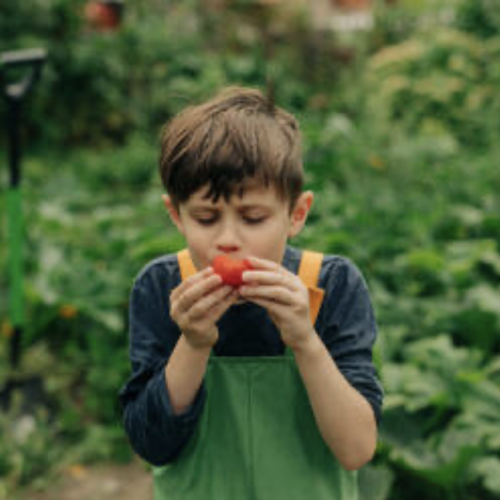

Tomatoes are one of the most common foods in homes and schools, yet they offer lessons far beyond nutrition. They can teach children about health, science, sustainability, food systems, and environmental responsibility. At Green Schools Green Future (GSGF), we believe simple foods can become powerful tools for learning and community transformation. A tomato plant can help students understand how nature supports both personal wellness and a sustainable future (Food and Agriculture Organization [FAO], 2021).
Tomatoes Support Healthy Children
Tomatoes are rich in vitamin C, potassium, folate, and antioxidants such as lycopene, which may help protect heart health and reduce oxidative stress (U.S. Department of Agriculture [USDA], 2024). These nutrients are especially important for growing children, who need consistent nourishment to learn effectively.
At GSGF, supporting children means supporting their whole development. Healthy meals and nutrition education are part of creating stronger learning environments where students can focus, grow, and succeed academically (World Health Organization [WHO], 2022).
Tomatoes Can Strengthen the Environmental Curriculum
Tomatoes are ideal for school gardens because they grow quickly with clear stages from seed to harvest. This makes them excellent teaching tools within any environmental curriculum focused on plant biology, ecosystems, water use, and composting (FAO, 2021).
When students grow tomatoes themselves, they learn where their food comes from and how their choices affect crops. GSGF promotes these real-world lessons because they create lasting understanding far beyond textbooks.
Hands-On Learning Builds Lifelong Skills
Students learn best when they actively participate. Gardening teaches planning, teamwork, observation, patience, and responsibility. These experiences also help prepare children for future careers in agriculture, sustainability, landscaping, nutrition, and green innovation (National Farm to School Network, 2022).
At GSGF, we know education should prepare students not only for tests, but for life. Practical experiences such as growing tomatoes help build confidence and independence.
Sustainable Schools Begin with Everyday Choices
Healthy and sustainable schools are built through small daily actions. Planting food, reducing waste, composting leftovers, and choosing local produce all contribute to healthier campuses and more responsible communities (United Nations Educational, Scientific and Cultural Organization [UNESCO], 2023).
Tomatoes can be part of cafeteria meals, classroom gardens, science projects, and nutrition workshops. This is how GSGF turns sustainability into something students can see, touch, and taste.
Food Security and Community Resilience
Tomatoes are affordable, widely available, and easy to grow in containers or raised beds. That makes them valuable for food security education, helping students understand how communities can produce fresh food locally and reduce dependence on unstable supply chains (FAO, 2021).
GSGF believes resilient communities begin with empowered students. Teaching children how to grow even one crop can create confidence and environmental awareness that lasts for life.
Investing in Green Education
Many schools want gardens, nutrition programs, and sustainability projects but lack funding. Financial contributions help schools gain access to soil, seeds, tools, learning materials, workshops, and outdoor learning spaces (UNESCO, 2023).
When communities invest in greener education, they invest in healthier children and better futures. That is the mission of GSGF.
Small Actions, Big Impact
Now is the time to act. This summer, you can support green schools for a better future in simple but meaningful ways.
1. Support Green Initiatives
Even small contributions can help fund materials, workshops, or new sustainability projects in schools.
2. Share the Message
Spread awareness about eco-friendly education and the importance of sustainable learning in Canada.
3. Subscribe to Our Newsletter
Stay connected with GSGF’s mission and discover ways to make a long term impact.
Final Thoughts
Tomatoes may look simple, but they represent nutrition, sustainability, resilience, and practical learning. One plant can teach science, healthy eating, teamwork, and environmental stewardship all at once.
At Green Schools Green Future, we believe better futures begin with seeds. A tomato crop today can help grow healthier children and greener communities tomorrow.
References:
Food and Agriculture Organization. (2021). School gardens and nutrition education. United Nations.
National Farm to School Network. (2022). Benefits of farm to school programs.
U.S. Department of Agriculture. (2024). FoodData Central: Tomatoes.
UNESCO. (2023). Education for sustainable development report.
World Health Organization. (2022). Healthy diet factsheet.
Westend61. (n.d.). Niño feliz cosechando y comiendo frambuesas al aire libre en el jardín [Photograph]. Westend61.