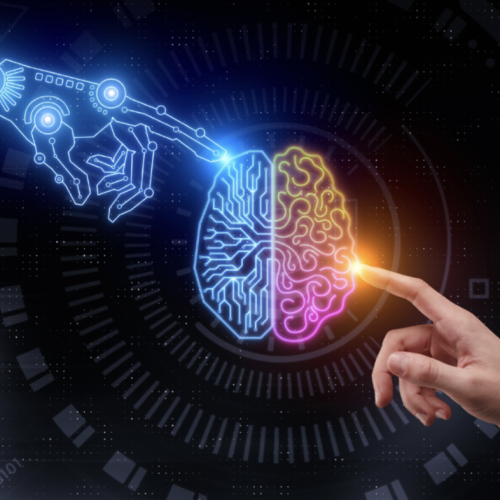

Walk into almost any classroom today and you will see the quiet glow of screens. Students do research with AI tools, draft assignments with digital assistants, and learn through platforms that promise personalized instruction. Technology can help, no doubt. But it also raises a deeper question: are we preparing children to depend on machines, or to care for the living world around them?
At Green Schools Green Future (GSGF), education is not just about academic performance. It is about raising healthy, capable, compassionate young people who understand their role in shaping a sustainable future. That means supporting the whole child, not only intellectual achievement.
The Hidden Cost of Screen Centered Learning
Many students now spend most of their day indoors, sitting under artificial lighting. They are often more sedentary and spend little time outdoors. Researchers have linked these conditions to higher stress levels, sleep disruption, anxiety, and reduced attention spans (World Health Organization, 2023).
Our bodies evolved with sunlight, physical activity, fresh air, and close social bonds. When we lack these important factors, learning becomes harder. Some experts suggest that many modern health challenges reflect a mismatch between contemporary lifestyles and human biological needs (Bredesen, 2026).
For educators, this insight is practical. A child who is exhausted, anxious, or physically inactive will struggle to focus, regulate emotions, and engage deeply in school.
Why Green Schools Focus on Whole Child Development
Green schools recognize that students are growing human beings, not just test-takers. Healthy learning environments support physical wellbeing, emotional safety, and social connection alongside academic growth.
Research shows that students in healthier school environments demonstrate better attendance, improved behavior, and stronger academic outcomes (U.S. Environmental Protection Agency, 2021).
Key elements of green schools like our upcoming one include:
- Access to nature (gardens, trees, bodies of water…etc)
- Regular movement (running, walking, stretching)
- Supportive relationships (with peers, teachers, and staff)
- Safe physical spaces for students to be themselves
- Meaningful, real-world learning
When these needs are met, students are more motivated, resilient, and capable of learning.
Learning in Nature Strengthens Learning Everywhere
Outdoor education is one of the most powerful tools available to schools. Time in green spaces has been associated with improved concentration, reduced stress, and better mental health among children (Kuo, Barnes, & Jordan, 2019).
Many of our partner schools integrate:
- Outdoor classrooms
- School gardens
- Environmental monitoring
- Biodiversity projects
- Field studies in local ecosystems
Students are not only learning about the environment. They are building a mutually beneficial relationship with it.
Movement Supports Brain Function
Traditional classrooms often require sitting for hours at a time, even though physical activity enhances cognitive performance. Exercise increases blood flow to the brain and supports memory, mood regulation, and executive function (Ratey & Loehr, 2011).
Green schools incorporate movement through:
- Flexible seating
- Standing desks
- Active lessons which involve the whole body
- Movement breaks between lectures
- Outdoor physical education
Instead of asking students to contain their energy and sit still, green schools use it to improve engagement and learning.
Food, Energy, and Academic Success
Nutrition also plays a major role in how students feel and perform. Diets dominated by ultra-processed foods have been associated with poorer health outcomes and reduced cognitive performance (Monteiro et al., 2019).
Our sustainable education curriculum will therefore incorporate the following:
- Hands-on garden-based learning
- Farm to school initiatives
- Cooking education
- Lessons on sustainable agriculture
- Discussions of food systems and climate
Our green school will have students growing crops, enabling them to understand sustainable agriculture through hands-on activities. Students begin to understand that their own health and the health of the planet are deeply connected.
Strong Communities Build Strong Learners
Humans are social by nature. Meaningful relationships help children feel safe, motivated, and encouraged to take risks in their intellectual development.
GSGF-aligned programs emphasize:
- Social emotional learning
- Collaborative projects
- Peer-to-peer mentoring
- Conflict resolution skills
- Community engagement
Our students will also live on the school grounds, allowing them to develop interpersonal skills further.
These experiences nurture empathy and responsibility, qualities essential for addressing environmental challenges.
Technology Should Support Humans, Not Replace Them
Artificial intelligence can be a valuable educational tool. It can improve accessibility, offer additional practice opportunities, and reduce the burden on teachers (Holmes, Bialik, & Fadel, 2019). However, too much reliance on technology may chip away at critical thinking skills, creativity, and interpersonal development. This is particularly the case when screen time replaces hands-on learning and face-to-face interaction (OECD, 2021).
Balanced education models teach students to use technology responsibly while still developing human skills. The goal is not to reject innovation but to ensure that technological progress supports learning without undermining wellbeing or independent thought (UNESCO, 2023).
Preparing Students for a Sustainable Future
Today’s students will face complex global challenges including climate change, biodiversity loss, and social inequities. Addressing these issues requires far more than technical knowledge. It demands larger-scale thinking, ethical decision-making, collaboration, and a long term perspective (UNESCO, 2017).
Sustainable education emphasizes that learners must understand the connections between environmental, social, and economic systems and develop the skills to act responsibly within them (United Nations, 2022). Without these human-centered capacities, AI and technological advancement alone cannot solve our global problems.
Students who learn in healthy, nature-connected environments are more likely to become adults who care about sustainability, public health, and community wellbeing.
Small Actions, Big Impact
Now is the time to act. This spring, you can support green schools for a better future in simple but meaningful ways:
- Support Green Initiatives
Even small contributions can help fund materials, workshops, or new sustainability projects in schools. Learn more about our project. - Share the Message
Spread awareness about eco-friendly education and the importance of sustainable learning in Canada. - Subscribe to Our Newsletter
Stay connected with our mission and discover ways to make a long-term impact.
References:
Bredesen, D. (2026). AI or EI? Apollo Health.
Holmes, W., Bialik, M., & Fadel, C. (2019). Artificial intelligence in education: Promises and implications for teaching and learning. Center for Curriculum Redesign.
Kuo, M., Barnes, M., & Jordan, C. (2019). Do experiences with nature promote learning? Evidence of a cause and effect relationship. Frontiers in Psychology, 10, 305.
Gilbert Meher. (n.d.). Harmony unlocked: The dance of AI and EI in recruitment [Image]. Gilbert Meher. https://www.gilbertmeher.com/in-focus/harmony-unlocked-the-dance-of-ai-and-ei-in-recruitment-283641/
Monteiro, C. A., Cannon, G., Levy, R., Moubarac, J. C., Louzada, M., & Jaime, P. (2019). Ultra processed foods, diet quality, and health. Public Health Nutrition, 22(5), 936–941.
OECD. (2021). 21st century readers: Developing literacy skills in a digital world. Organisation for Economic Co operation and Development.
Ratey, J. J., & Loehr, J. E. (2011). The positive impact of physical activity on cognition. Journal of Clinical Psychiatry, 72(8).
UNESCO. (2023). Guidance for generative AI in education and research.
United Nations. (2022). Transforming education for sustainable development.
U.S. Environmental Protection Agency. (2021). Healthy school environments and student performance.
World Health Organization. (2023). Guidelines on physical activity, sedentary behaviour, and sleep for children.