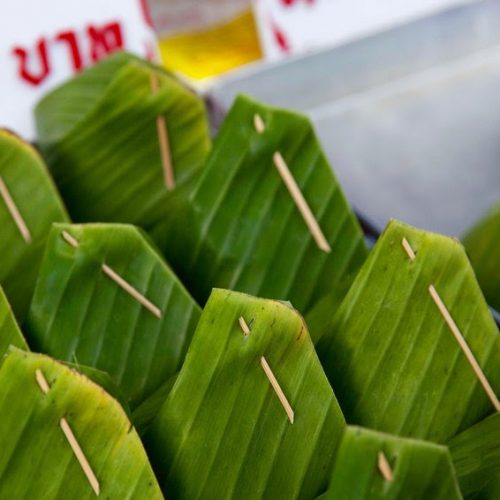
Plastic trash is a major contributor of pollution. However, some countries are trying to cut back on plastics. Thailand and Vietnam are rolling out banana leaves as a replacement for plastic packaging. This is a promising development, since these 2 countries were among the 5 that collectively produced 60% of the plastic in oceans in 2015.
In Thailand, Rimping Supermarket posted a photo of vegetables wrapped in banana leaves on Facebook. It went viral, getting thousands of likes and comments.
In Vietnam, Lotte Mart is testing the idea of wrapping produce in banana-leaves in one of its Ho Chi Minh City locations. If shoppers react positively, the company will expand the practice to other stores. Lotte Mart is also looking at more eco-friendly packaging options for meat. Customers have largely left positive comments. One customer claimed that the pretty banana-leaf packaging made them more willing to buy more produce.
Another Vietnamese supermarket, Saigon Co.op, has introduced banana-leaf packaging in several stores. Big C has also brought the practice to Hanoi in April.
Why Banana Leaves?
Banana leaves are common in Southeast Asian countries. They have long been used to wrap and prepare food, making produce a natural next step. They can be as long as 9ft and are biodegradable.
Other Asian Countries
Apart from Thailand and Vietnam, other Asian governments are cutting back on plastics. South Korea banned disposable bags and Taiwan imposed a fee on them. China has banned thin plastic bags since 2008, which has eliminated as much as 40 billion bags.
The rise of banana leaves as produce packaging shows that common, everyday materials from nature can help the environment.
Reference:
https://www.ecowatch.com/plastic-waste-banana-leaf-2634135600.html