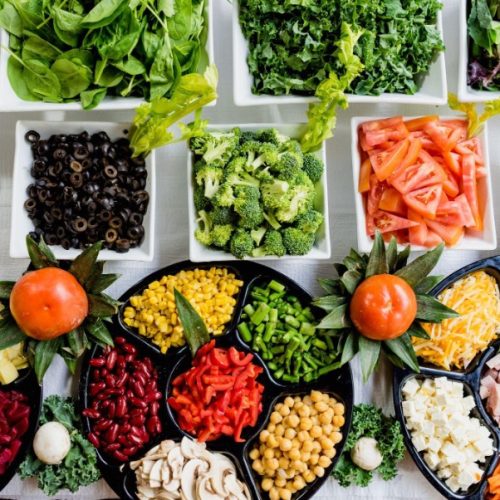

Food is a delicacy around the world, indicative of diverse culture and used to celebrate throughout the year. Unfortunately, our current food systems cannot sustain the 8 billion people on this planet without risking detriment to the environment.
The Food Cycle
Processes such as producing, transporting, and storing wasted food all contribute to the global picture of climate change through GHG (greenhouse gas) emissions. Livestock production contributes to an estimated total of 14.5%. This means that the next time you consider getting a burger, the meat production was the highest emission intensive out of the rest of the ingredients.


GHG emissions from food systems predominantly come from food production at 83%. Next is 11% for transportation and the remaining 6% comes from retail.
Our food systems contribute gravely to climate change that is by 2050 we were to switch to renewable energies and public policy and infrastructure investments have made walking, cycling, and public transit the most accessible and popular forms of transportation while air travel is kept to a minimum, but we still continue in the global-trends of meat/dairy production/consumption, we will have a challenging time staying below the two degree celsius threshold.
Everyday Tips to Lower GHG Emissions
How can you lower your “foodprint” and still get all the nutrition you need while making a positive difference in our food systems?
When planning meals, you might want to consider some of the following questions:
- How low on the food chain is this?
- How much energy goes into producing it?
- Is it grown organically?
- How far did it travel to get to the store/table?
1. Eat more plant-based meals at home and at restaurants
This is an effective way to reduce your emission footprint. According to Meat Free Monday, skipping meat for one day of the week can reduce your annual footprint as much as not driving your car for the entire month. The main reason why meat and dairy yield such high levels of emissions is because it is inefficient to cultivate livestock. It takes about 5-7 kilograms of grain to produce 1 kilogram of beef.
A Boston Consulting Group report noted that for each dollar, investment in improving and scaling up meat production and dairy alternatives resulted in 3x more greenhouse gas reductions compared to investment in green cement technology, 7x more than green buildings, and 11x more than zero-emission cars.
Plan ahead and choose vegetarian and vegan dishes when going to restaurants to help reduce emissions. You don’t need to give up the comfort of eating out when going meatless.
2. Eat organic and shop local whenever possible
Food grown locally produces fewer transportation emissions, is fresher, and supports local farmers. Food transport contributes to 11% of the overall emissions and the average meal travels 1,200 kilometers from the farm to plate.
Do note that most of the emissions still come from production. One study showed lamb raised in New Zealand and shipped 18,000 kilometers to the U.K. produced less than a quarter of the greenhouse gases of locally raised British lambs. Shipping the lamb to the U.K. produced only 5% of greenhouse gases and the other 80% were from farm activities.
Nevertheless, buying local still reduces significantly. While buying local is a great step forward in the right direction, buying local AND organic is a better choice for the environment.
Synthetic pesticides and fertilizers are often made from fossil fuels. Studies have shown chemical farming uses more energy per unit compared to organic farming. This is because synthetic nitrogen fertilizers produce nitrous oxide, a substance 300x more powerful than carbon dioxide. Growing your own food is a great way to enjoy fresh produce minus the negative impact.
Related article: Tips on How to Start Your Eco-Friendly Gardening and The Tools Needed!
3. Cut overconsumption and reduce the amount of food waste produced in your household
About 20% of Canada’s methane emissions comes from landfills. By throwing out food waste, the resources put into growing, transporting, packaging, and producing the food are also wasted. This includes large quantities of water.
Some ways you as an individual can reduce food waste is by:
- Turning scraps into delicious meals by looking at cooking websites, cookbooks, or social media influencers
- Increase the shelf-life of your ingredients. Find some tips from the David Suzuki Foundation
- Avoid plastic produce bags and take produce out of plastic wrappings. Airtight wrappings suffocate fresh produce and speed up the decay process
- Don’t wash produce until you’re ready to eat it. Moisture encourages decomposition and mold growth
- Don’t rip off fruit stems. Once living cells are broken, microorganisms start to grow. Keep produce whole as long as possible until you consume them
- Eat the most perishable items first. Raspberries last a few days. Potatoes can hang around for about a month
- If you want, speed up the ripening process for produce by putting the item (a peach, for example) in a paper bag with a banana
- Store herbs with stems (such as cilantro and parsley) in a jar with water in the fridge. Don’t forget to change the water a few times a week!
Reducing GHG Emissions from Food: A Public Call
Countries such as the U.S. with the highest per capital meat and dairy consumption must especially take responsibility to reduce GHG emissions from their food systems. Individual habits to eat more plant-based meals and reduce food waste are helpful, but we will need national policies to help educate the public and shift our large-scale “foodprint”. For now, try our tips to reduce your own “foodprint” and encourage others around you to do the same.
At Green Schools Green Future, we support sustainable food practices and habits to preserve our planet.