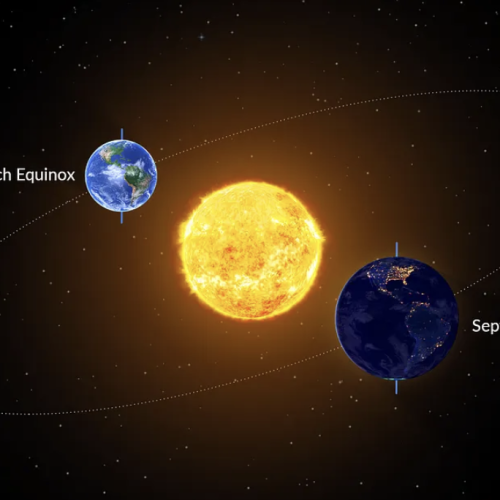

What is the March Equinox?
The upcoming climate phenomenon called March equinox – also called the vernal equinox – is a quiet but very important day in the year. In 2026, March 20th will mark the day when the Northern Hemisphere will begin to transition to spring weather. At the same time, the Southern Hemisphere will transition to autumn.
The equinox happens because our planet’s seasons come from Earth rotating on an axis. It always points in the same direction, but can tilt.
The word “equinox” comes from the Latin “aequinoctium”, with “aequa” meaning equal and “nox” meaning night. On the day of an equinox, night and day last roughly the same duration around the globe.
While the day itself is not affected by the Earth’s changing climate, the equinox invites certain key changes to both the Northern and Southern hemispheres.
Equinox in the Northern Hemisphere
In the North, the equinox brings on earlier sunrises, later sunsets, softer winds, and budding plants.
During the spring equinox, many cultures traditionally celebrate the coming of the season as a time for change and growth. In Christian traditions, Easter celebrates spiritual renewal and hope. The Holi festival celebrated in Hinduism is also a time of finding joy as winter changes to spring. Those who observe this tradition throw coloured powders, which represent springtime colours.
Equinox in the Southern Hemisphere
In the South, the equinox brings later sunrises, earlier sunsets, chillier winds, and dry, falling leaves.
While celebrations for this half of the globe are not as widespread as traditions marking the coming of spring, cultures in the South hemisphere may use this time to reflect. By reflecting, they can prepare for getting through the winter. People may also plan how to make better use of the next spring by asking themselves questions such as:
- What might I need to let go of spiritually and personally to find more balance in life?
- What habits will I plant “seeds” for to sow next spring?
- What does balance look like to you?
Conclusion
The March equinox reminds us of the ebb-and-flow nature of Earth. Different countries and regions have different perspectives and approaches even on matters of climate. What we share in common are the hope for renewal, growing as individuals, and taking the time to reflect on ourselves to support our personal and collective growth.
At Green Schools Green Future, we’d like to express our gratitude for your ongoing support. Your donations to the Green Schools Foundation have helped our community grow and raise awareness about critical environmental issues. If you’re able, please consider making a donation to support us in building our first green school.
Don’t forget to subscribe to our monthly newsletter and stay updated.
References:
https://wemoon.ws/blogs/pagan-holiday-traditions/spring-equinox
https://en.wikipedia.org/wiki/Equinox
https://www.nasa.gov/blogs/watch-the-skies/2022/03/18/march-equinox-welcomes-astronomical-spring/#:~:text=The%20March%20equinox%20%E2%80%93%20also%20called,%2C%20and%20dry%2C%20falling%20leaves.
https://www.christmascentral.com/resources/holiday-histories/history-of-easter/?srsltid=AfmBOooUOQ56KqZoW7fLTB2sFkHizPn_dQ20-nVY7HHP52VsZVhJDkmx
https://janehardwickecollings.com/autumn-equinox-mabon-southern-hemisphere/
https://starwalk.medium.com/what-is-an-equinox-the-day-that-changes-seasons-be54d58eb92?source=post_internal_links———6—————————-