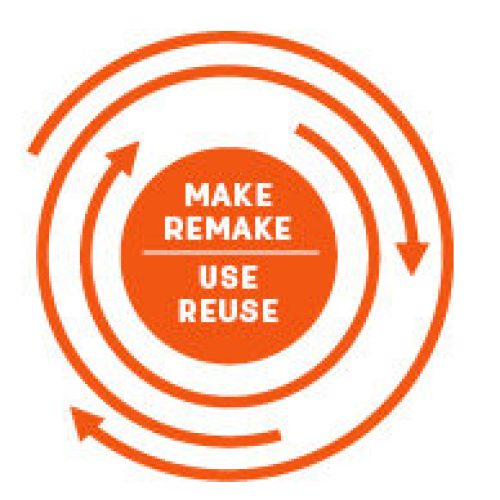

At Green Schools Green Future, we want to encourage students to adopt environmentally friendly resource and waste management practices. By doing this, they will achieve environmental sustainability for themselves, their school, and their community. A good way to do this is to adopt the circular economy approach. This approach maximizes the use of already-extracted resources, products, and packaging. It also reduces waste.
The Big Picture of Waste
According to the Global Waste Index 2025 Report, Canada generates more waste per person than most other developed countries at about 700 kg per person annually (only 5 out of 38 countries generate more waste per person than us). The top-ranked country in the index – Japan – only produces about 330kg of waste per person annually. In addition, Canada extracts more than five times as much raw material per person compared to the international average, and this number is growing. All this waste and resource extraction contributes significantly to climate change and biodiversity loss, both of which are considered environmental emergencies. Circular economy methods address these emergencies.
This approach includes more than just recycling. It affects each stage of the product life cycle, including design, manufacturing, use, and end-of-life disposal. The goal here is to make maximum use of already-extracted resources, products, and packaging in each stage of the life cycle without any waste or pollution.
The circular economy approach keeps products and materials in use after each cycle (e.g. through methods such as reuse, repair, refurbishment, or recycling) with no resulting landfill waste. Biodegradable materials are sent back into natural environments after maximum usage to help instead of harm the environment. Also, with this approach, consumers share with others in a sharing economy (e.g. car sharing) to maximize product utilization. Following the circular economy approach could eliminate about 45% of existing climate emissions and halt global biodiversity loss.
There are many different ways for us as consumers to participate in the circular economy approach. Here are some examples.
Sharing
Instead of buying many items that we only use once in a while, the circular economy approach encourages sharing them. Examples of items you can share include:
- power tools (e.g. borrow a tool from Home Depot instead of buying it)
- camping equipment (e.g. some libraries allow users to borrow camping equipment)
- sports equipment (e.g. some municipalities and libraries allow residents to borrow sports equipment)
- kitchen and dining items (e.g. some rental stores offer small appliances)
PRO TIP: Consider visiting a local rental shop to see all the opportunities available for borrowing. An example is the Toronto Tool Library – you can check out their website.
Repairing
When something is broken, don’t throw it away. Consider repairing it. Examples of things that we usually don’t think of repairing include cell phones, shoes, bicycles, clothing, and a number of other items. All of these items can typically be repaired, sometimes at a very reasonable price compared to replacing the item.
PRO-TIP: Consider visiting a community repair café if one exists in your community. These are events where volunteers offer to repair certain items for free. Items that can be repaired at these sites typically include clothing, small household electronics, bicycles, and other household goods.
Reusing
Reusing an item means that someone else takes ownership of the item after the original owner. For example, you can donate your textiles to someone else after you no longer need them. Thrift stores, which sell second-hand goods, accept used item donations to sell at discounted prices. An example is Value Village, a thrift store franchise in Ontario, Canada. If you wish to sell a product you no longer need, or buy a used product, you can consider an online portal such as Facebook Marketplace or Kijiji.
A related circular economy method is trading something in. A trade‑in is when you bring a working, good‑condition product to a store, they assess its value, and you receive a gift card for that amount in exchange for giving the store your product. Canadian stores such as Best Buy and Staples have trade-in programs for products such as cellphones, tablet devices, laptops, and other devices.
Advocacy
As you take action, you might find that spreading the message is just as important, if not more. After all, the actions of many people can help reduce climate change and biodiversity loss more than the actions of just one person. An example of circular economy advocacy is to work with students. Over the last few years, I have been working with students in grades 4 through 12 to adopt circular economy methods as part of their regular classwork and school activities. I present the details of the circular economy approach and then have students apply these waste reduction strategies in their schools.
Examples of projects that students have participated in include:
- repairing items
- organizing a swap event
- promoting waste reduction through school publications
- collecting used textiles from students for donation purposes
- collecting used books to donate to libraries
- repurposing textile waste
There were also many other circular economy topics.
At Green Schools Green Future, we encourage students to take such actions to improve the sustainability of their school and community.
Other Methods
A number of other options are available for you to take action. See this website from the Ellen Macarthur Foundation for more details. This organization promotes circular economy methods worldwide.
Conclusion
As noted above, circular economy methods are activities we can do every day to fight climate change and biodiversity loss. A very powerful way to promote these methods is through education. Green Schools Green Future is a Canadian non-profit charity (registration number: 783450919RR0001) committed to sustainable operations and environmental education for students from the ground up. To reach as many students as possible, we need your help! Please consider donating to the GSGF Foundation today.