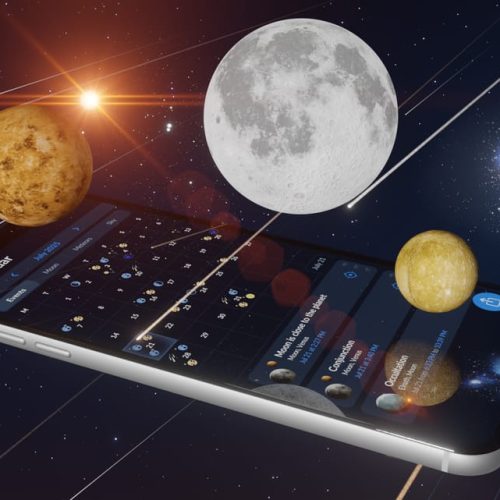
As summer settles in, July 2025 offers a fascinating array of celestial events for stargazers across Canada, from dazzling planetary conjunctions to ideal conditions for spotting distant galaxies. It’s a perfect time for schools and families to connect with the cosmos and foster an appreciation for our incredible universe.
Highlights of July’s Night Sky
- The Full Buck Moon (July 10): July’s Full Moon, traditionally known as the “Buck Moon,” will illuminate the night on July 10th. This name comes from the time of year when male deer begin to grow new antlers. While its bright glow might make fainter stars harder to see, it’s always a beautiful sight for a relaxed evening under the sky.
- Planetary Pairs: Keep an eye out for several captivating planetary close approaches:
- Saturn and Neptune Conjunction (Early July): This is a rare, generational event! From late June to mid-July, Saturn and Neptune will be incredibly close, within less than a degree, offering a unique opportunity for binocular and telescope users to see these two giant worlds together. They’ll be closest around July 6th. You’ll need to observe several hours before dawn.
- Venus near Aldebaran & the Pleiades (July 13): Look to the predawn sky on July 13th as dazzling Venus passes remarkably close to Aldebaran, the bright eye of Taurus, and shines near the beautiful Pleiades and Hyades star clusters. A truly picturesque morning scene!
- Moon and Planets (Throughout the Month): The Moon will make close passes by several planets. Watch for the waxing crescent Moon near Mercury (July 3), Venus (July 21), and Jupiter (July 23), offering great photo opportunities and easy ways to locate these planets.
- New Moon for Deep-Sky Treasures (July 24): The New Moon on July 24th brings the darkest skies of the month. With no moonlight to interfere, this is the prime time for stargazing and observing faint deep-sky objects. Grab your binoculars or a telescope and try to spot:
- The North America Nebula (NGC 7000): A vast emission nebula shaped like our continent, visible even with binoculars under dark skies.
- The Lagoon Nebula (Messier 8): Bright enough to be seen with the naked eye from truly dark locations, and stunning through binoculars or a telescope.
- The Eagle Nebula (Messier 16): Famous for its “Pillars of Creation,” this nebula and its embedded star cluster are a treat for telescopic observers.
- Minor Meteor Showers (Late July): While less active than the Perseids in August, July brings a couple of minor meteor showers:
- Southern Delta Aquariids (Peak July 31): Active from mid-July to late-August, these faint meteors are believed to originate from Comet 96P/Machholz. The Moon will be only slightly illuminated around its peak, making for decent viewing conditions.
- July Gamma Draconids (Peak July 28): This shower offers about 5 meteors per hour, with a possible outburst expected in 2025, making it worth a look!
July’s night sky is full of opportunities for discovery and wonder. Encourage your students and community to step outside, find a dark spot, and explore the universe above. It’s a powerful way to inspire curiosity and highlight the interconnectedness of our planet with the wider cosmos.
Sources:
Star Walk – July Sky Events 2025
High Point Scientific – What’s in the Sky This Month? July 2025