
We all go about our days and we pretend that the world is as it should be. Sometimes we separate some waste and feel really proud of ourselves — we are helping to save our planet! Afterward, though, we’ll go to the supermarket and buy a cucumber wrapped in plastic, but everything will be fine because we can just recycle that…
Bad news: Just separating trash or recycling is not enough
An Australian investigation from Newcastle University found that we ingest approximately 5 grams of plastic per week. That’s the equivalent of a credit card. Making changes to our daily lives and reducing how much plastic we consume is not just about saving the planet. It’s about our future.
The same study, titled “No plastic in nature: assessing plastic ingestion from nature to people”, revealed that the main source of global plastic ingestion is water — both bottled and tap. Why? Most of the world’s waste ends up in our rivers and seas, where it comes into contact with microplastics. Then, it makes its way into our homes and into our bodies. “Plastic is polluting the air we breathe, the water we drink, and the food we eat,” the study’s researchers say, reflecting a truth that urgently needs addressing. Plastic production has grown at a rate of 4% annually since 2000, and it’s because we continue to consume products made with plastic. Demand keeps increasing.
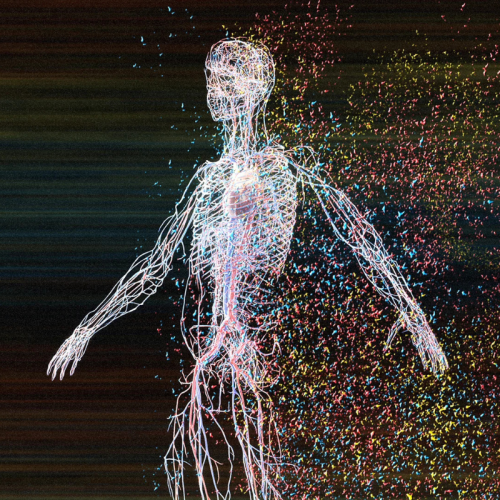
Scientists have been trying to study how ingesting microplastics affects the human body, but they haven’t found anyone without microplastics to serve as a control. Even newborn babies are thrust into life with microplastics. We still don’t know all the effects but what we do know is that microplastics haven’t always been here and that they could be changing us in ways we can’t yet understand.
And now — what can we do?
Refuse
Avoid plastic whenever possible. This is one of the most effective ways to reduce the waste you generate and decrease the demand for plastics. No change is as important as avoidance.
Reduce
If you cannot avoid plastic, try to look for lower-waste alternatives. Opt for organic products and those made with natural materials as much as you can. The Earth and your body will thank you immensely.
Reuse
Choose reusable products and extend the lifespan of what you already have. If you don’t know how to do that, you can find large online communities where people can share their experiences of transforming and reusing products at home.
Recycle
Continue recycling, but understand that it is only one part of the solution. Recycling only works if we stop generating waste. Today, we are the product of what has been consumed over the past few decades. We have achieved great changes by working together globally, but every day a huge amount of plastic and waste reaches our local shops, supermarkets, restaurants, and more. We have a responsibility to continue driving change.
Change is not about perfection—it’s about awareness, consistency, and informed choices. That’s why education is fundamental when discussing any topic related to our planet. We need to know what we consume and how our choices transform the world. We invite you to continue educating yourself and society with us. What we do is important. What will you do for the future?
Are you enjoying our blog?
Green Schools Green Future is a Canadian non-profit organization founded in 2018 with the mission of building a school where environmental responsibility isn’t taught as a subject, but as a way of life. We believe that educating children from the early years will help us create a more conscious and respectful society. From the youngest students, who will learn why we say no to unnecessary plastic straws, to the oldest, who will understand the science of biopolymers and the economics of sustainable materials, our dream will grow with them. We are currently in the fundraising phase. Every contribution brings us closer to a school where the next generation doesn’t inherit the plastic problem; they will learn to reject it.
Donate here and help us build a green school to educate present and future generations.
Subscribe to our newsletter for monthly updates on our progress.
Sources:
National Library of Medicine, 2025, A Review on Replacing Food Packaging Plastics with Nature-Inspired Bio-Based Materials https://pmc.ncbi.nlm.nih.gov/articles/PMC12110880/
The University of Newcastle, Australia, 2019, No plastic in nature: assessing plastic ingestion from nature to people https://awsassets.panda.org/downloads/plastic_ingestion_press_singles.pdf
Journal of Bioresources and Bioproducts, 2022, Molded fiber and pulp products as green and sustainable alternatives to plastics: A mini review https://www.sciencedirect.com/science/article/pii/S2369969821000803