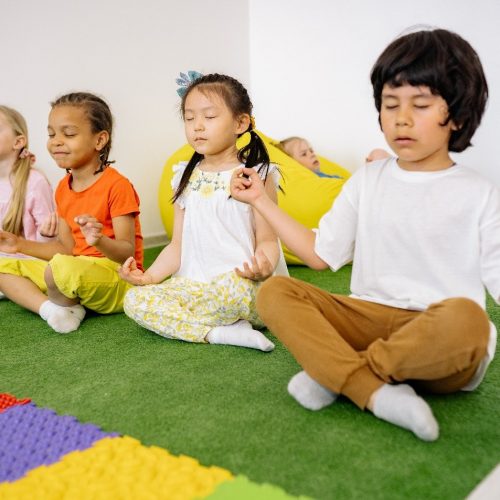

Meditation is much more than simply watching your breathing. Adults should include meditation in their everyday routines as a way of life. What about their children? Is it necessary for them to learn how to meditate? Is meditation beneficial for a child’s discipline?
There has been a lot of published research on the advantages of meditation and its various forms. Many of us who meditate think of it as a great way to deal with daily problems. However, not everyone tries it or does it consistently. Reasons include busy schedules, forgetting, or simply not believing regular meditation is worth the time and effort.
To pass on the benefits of meditation, we should teach our children to adopt it into their routine. That way, they will practice meditation as naturally they eat, play, or socialize.
Benefits of Meditation for Children
Let’s have a look at some advantages of practicing meditation from a young age.
1. Reduces anxiety and stress
This is one major benefit. According to a study, continuous stress causes toxic stress, which damages children’s nervous system, immune system, and may even cause a change in their DNA.
Today, we live in a world full of misinformation, stimulation overload, and fast-paced lifestyles. This is a lot for our young ones to handle. Meditation can help them stay calm and focused to deal with issues sensibly.
2. Reduces fights and disagreements at school
Disagreement and conflicts are on the rise in schools. Factors include academic pressure or something kids are going through in their personal lives. Their anxious brains make them easily irritable, sometimes resulting in conflicts over little things. Meditation in school is an effective way to maintain a peaceful school environment.
Schools should give students 15 minutes of meditation time each day with a qualified instructor who can assist them based on their age.
3. Better sleep
It is a good idea for kids to meditate before going to bed and after waking up. Daily meditation periods of 5-10 minutes will considerably enhance their sleep and energy.
4. Build patience
When children learn to keep calm, sit quietly, and control their behaviour, they also learn to control their desire for immediate rewards. Meditation teaches them delayed gratification and patience.
Beyond Meditation: Mindfulness Activities for Kids
Meditation is not the only way to practice mindfulness. Here are some other ways for children to live mindfully:
1. Take a walk in the woods
Guess what has healing properties? Nature! When someone spends time in nature and sees the beauty, greenery, and colours, the healing process begins within. Take your children on a walk in the woods and ask them questions to immerse them, such as:
- What do you hear?
- What does it smell like here?
- Close your eyes. How does it feel to walk on the grass?
2. Try mindful eating
Did you know that eating can also be an act of mindfulness? Mindful eating involves not just the look, smell, and taste of the meal but also food preparation. Here are some tips:
- Express thankfulness for the food. Children can do this out loud and in their thoughts
- Ask your kids to feel the food’s flavour and texture, relishing each bite
- Ask them how they feel after eating the food
3. Ground the body
Being aware of your senses and your body in space is a key way to practice mindfulness. Follow these steps:
- Ask your children to lie down on their backs
- Have them stretch their whole bodies
- Tell them to feel all their tightness melt away
- Ask them to focus on their heads getting lighter. Then, go down from eyes to toes
- Let them stay in this state of awareness for some time
- Count from 1 to 5 and then ask them to open their eyes
- Ask them how they felt
4. Backward counting
Backward counting is the best approach to focus your attention away from everything else and on just one task. It is a simple and efficient method for calming down and sharpening attention. This meditation may be done seated or lying down.
Simply instruct children to count from 50 to 1 or 100 to 1. Make sure they count slowly; counting 50 to 1 should take them at least 15 minutes.
5. Be a role model
If you want your children to accomplish something, you should do it yourself. Children learn through imitating others. If you simply ask them to meditate or practice mindfulness, they may not comply. First practice the activity in front of them and they will likely imitate your actions. Then you can easily teach them the steps and why the activity is good for them.
Additional Tips
1. Every child is different
Remember that children may adapt to meditating or mindful activities in different ways or at different ages. Some children may like quiet meditation sessions while others may enjoy walking in nature better.
2. Do not force meditation or other mindfulness activities on kids
Whatever form of mindfulness they adopt, keep in mind that forcing activities on kids is not effective. If you do, they will see the activities as something to complete as quickly as possible.
3. Progress gradually
Take it one step at a time. Don’t expect your children to master meditation or mindful eating quickly. If you set your expectations too high, your child may lose interest or get frustrated.
At Green Schools Green Future, we promote natural and healthy ways to live.
Want more sustainability tips and updates on our green school project? Join our growing community!
Sources:
Headspace – 5 mindfulness activities for kids
Headspace – Meditation for kids
Hiya Health – Benefits of Meditation for Kids
Happiness.com – The Benefits of Meditation For Kids
Medical News Today – Meditation for Kids
Chopra.com – 3 Kid-Friendly Meditations